Wheelchair to Walking: Art Thomas's Story and the Program He Built From It
Art Thomas spent 18 months bouncing between hospitals with no diagnosis and left them in a wheelchair, unable to touch his own nose. Every neurologist said that was as good as it gets. Today he walks, drives, travels, and lives alone. This is how it happened, and why he built LWA so others can do the same.

Wheelchair to Walking: My Story and the Program I Built From It
By Art Thomas | October 12, 2026 | My Story
I'm going to tell you my story. Not for a pat on the back. I'm telling it because it's the reason LWA exists, and because somebody reading this is sitting right where I sat, being told what I was told. You need to hear how it ends.
I have ataxia, and I like to call it MS on steroids. Acquired Ataxia, to be exact, and it lit the fuse on an unknown hereditary Ataxia I didn't even know I was carrying. Ataxia damages the cerebellum and the nervous system. It's not weakness. It's a broken signal. And here's what nobody told me back then: broken signals can be rebuilt.
18 Months of Nobody Knowing
No answers. For 18 months I bounced from hospital to hospital with no diagnosis. Test after test. Specialist after specialist. Shrugs. Referrals. More shrugs.
The wheelchair. I left those hospitals in a wheelchair. I couldn't touch my own nose. Think about that for a second. Close your eyes and touch your nose. Easy, right? I couldn't do it.
The verdict. Every neurologist I saw told me the same thing: the wheelchair was as good as it was going to get. Get used to it. Manage your symptoms. Adjust your expectations.
The diagnosis. Georgetown University Hospital finally put a name on it. But a name is not a plan. And the plan I got was the same one everybody gets: manage it.
"Manage your symptoms" is a garbage goal. Managing symptoms is not living. (I wrote a whole post on this, "Just Manage It." — The Two Words That Are Keeping You Stuck, and I meant every word.)
I Wasn't New to Getting Knocked Down
Ataxia wasn't my first fight. At 19, a head-on collision broke me so badly that crews had to cut the car open to get me out. Around 24, I shattered my collarbone. Throw in multiple concussions and a fistula that put me in sepsis four separate times.
So when people ask where "Get Comfortable With Being Uncomfortable" came from, I didn't borrow it off a poster. It was forged.
The wheelchair was a different kind of loss, though. It's not just physical. It's losing the version of yourself that moves through the world on your own terms. Privacy. Spontaneity. The thousand small dignities of doing things for yourself.
I hated it. And that hate was useful.
Nobody Had the Answers, So I Built Them
The questions nobody could answer. I kept asking the same questions. How do I get out of this chair? What do I actually DO? Nobody could answer them. Nobody was doing what I needed. So I stopped waiting and built the approach myself.
Exercise: the signal. Your brain can adapt and rewire throughout your life. That's not wishful thinking. That's neuroplasticity. But it only rewires when you give it the right input: specific, progressive, consistent, and hard. Not "take it easy." Not twice a week and hope. Hard, repeated, targeted work, day after day.
Nutrition: the material. This is the part the mainstream skips almost completely. I went carnivore. You can't rebuild a nervous system on bad fuel. Exercise gives the brain the signal. Nutrition gives it the material to act on it.
And I'll say this plainly, because somebody always asks: carnivore will NOT lower your cholesterol. That's fine. That's expected. Cholesterol is one of the building blocks of your brain. I wasn't trying to win a lab report. I was trying to walk.
Then the grind. I failed at things. I adjusted. I had days where nothing seemed to move. It was moving. You just can't watch wiring rebuild in real time.
Walking Out of the Chair
There wasn't one Hollywood moment. Neurological recovery doesn't work that way. It's two steps forward, one step back, and a lot of weeks where you can't see the progress until you look back.
But it came. My balance got more reliable. My gait got more controlled. I started doing things I hadn't done in years.
The day I really walked on my own, not shuffling with a hand on the wall, I didn't throw a party. I just kept going.
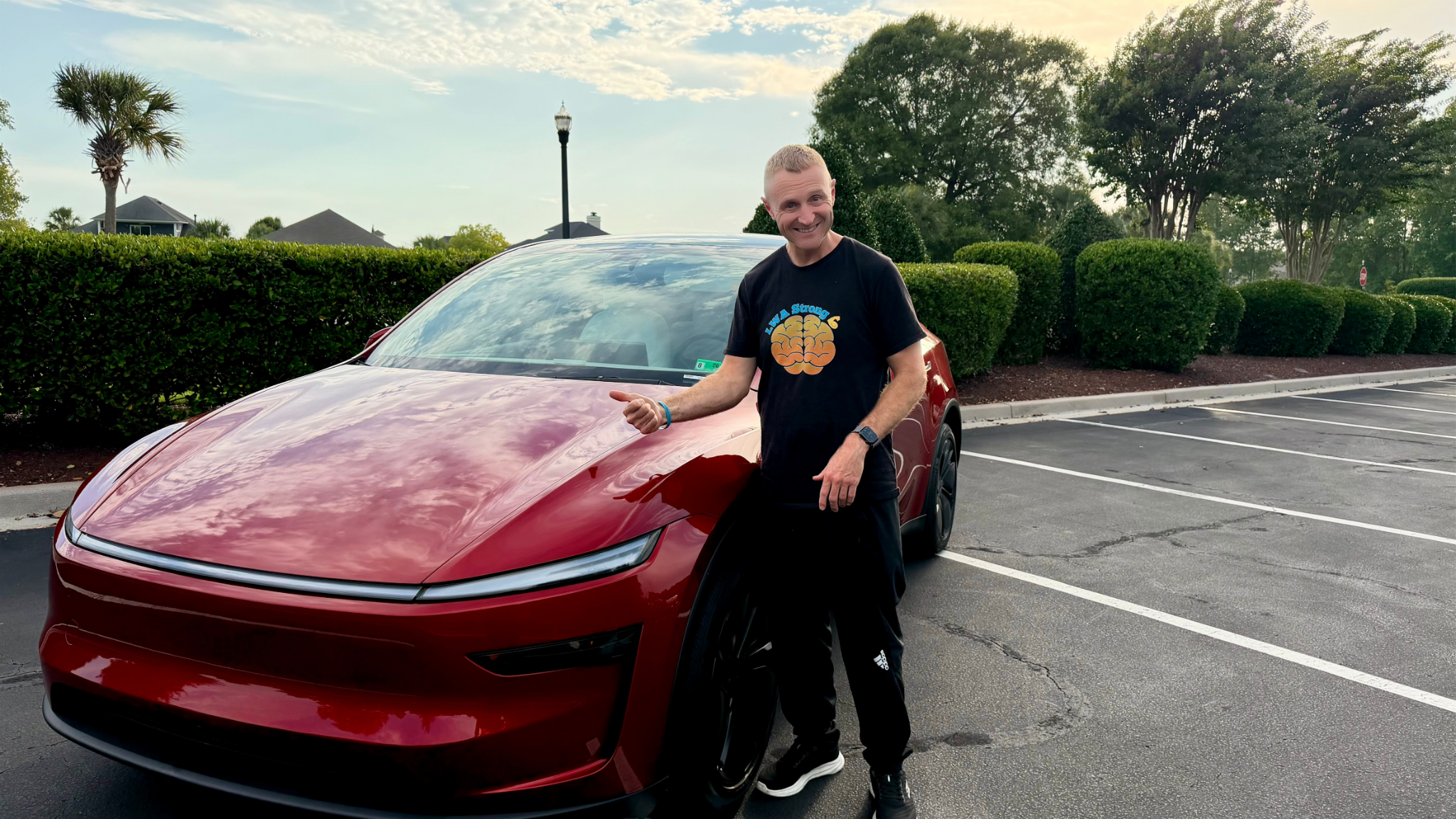
Because the point was never just walking. The point was independence. And today I have it. COMPLETELY. I walk. I drive. I travel. I live on my own. Not "independent with a walker parked by the door." Independent.
As far as I know, I'm the first person to go from a wheelchair to complete independence this way, with exercise and nutrition. Hell of a first to hold.
Where Stem Cells Fit (And Where They Don't)
I want to be crystal clear here, because this gets told wrong.
I was already independent before I ever had stem cells. Exercise and nutrition got me out of the chair. Not stem cells.
After that, I became the first person with ataxia to get stem cell treatment, done by R3 Stem Cell. Two treatments done, a third coming. R3 is now an official LWA advisor, and I believe in what they do.
But stem cells were the cherry on top, not the cake. They're not a magic bullet, and they don't do the work for you. That's why LWA runs pre- and post-stem-cell rehab programs: you want your body primed going in and trained hard coming out. (More on that in Stem Cell Therapy & Neurological Rehabilitation.)
Why I Built LWA
When I was in that chair, the program I needed didn't exist.
There were physical therapists for specific deficits. Neurologists to monitor the disease. Support groups to share the struggle. But nothing that put it all together: the hard work, the nutrition, the accountability, and a relentless focus on independence instead of "management."
And there's a bigger problem. The mainstream machine chases a number on a lab report and pours everything into a "someday" cure, while almost nobody asks what a drug is doing to how you move, balance, and function today. Hand a statin to a neurological patient and alarm bells should go off. Too often, they don't.
That gap, your real life right now versus a number on a chart, is exactly why LWA exists.
So I built what I wish I'd had. And I didn't build it alone. My partner, Danny Walls, President — Health & Fitness Advisor, brings 20 years as a personal trainer and has rehabbed clients across a long list of neurological conditions. I bring the lived experience. Danny brings the professional muscle.
What LWA Actually Is
Built for ALL neurological disorders. Ataxia, MS, Parkinson's, stroke, TBI, spinal cord injury, cerebral palsy, ALS, peripheral neuropathy, Guillain-Barré, transverse myelitis, and more. If it's neurological, there's a strong chance we can build for it.
Remote, worldwide. We work with clients over Zoom and video, wherever you are. If you're around Myrtle Beach, one-on-one in person is an option too.
Personal, not off-the-shelf. Every program is built around your goals, your condition, and where you're starting from. Custom workouts, video demos of every exercise, and nutritional guidance in every single package. Nutrition is the foundation, not an upsell.
The guarantee, and the honest fine print. Our Wheelchair to Walking — Ultimate All-Around program comes with the Independence Guarantee: wheelchair or walking aids to walking independence. One condition: your mobility checklist must be at 100%. Exercising 3 to 4 hours a day will ensure you complete the checklist to 100%. Our exercises and coaching are built to help you check every box, but completing the checklist is your part. We do our side 100%. You do yours.
I'll be straight with you, because false hope is not kindness. Some conditions may prevent walking, and the free consult determines that up front. If walking is not physically possible, we guarantee a meaningful, suitable level of independence, because independence is bigger than walking. (For what it really takes, read Wheelchair to Walking: What It Really Takes (And Why Most Programs Fail).)
Most neurological conditions are progressive when you take the wrong approach. We have the right approach.
Who This Is For
This is for the person who's been told "manage it" and isn't buying it.
This is for the person who did traditional PT, plateaued, and knows there's more in the tank.
This is for the person in the wheelchair who has no plans to stay there.
This is for the husband, wife, son, or daughter watching someone they love lose their independence, looking for something that actually works.
I was that person. I know exactly how it feels. And I know what's on the other side.
The First Step
It starts with a FREE 30-minute Zoom consultation. We talk about where you are, where you want to be, and whether LWA is the right fit. If it is, we get to work. If it isn't, I'll tell you straight, even if the honest answer is a smaller package or somebody else entirely.
Get Comfortable With Being Uncomfortable That's the LWA way. Knowing your enemy is half the battle. My enemy wasn't the wheelchair. It was a plan that said the wheelchair was the finish line.
Ready to write your own "before and after"? Whether it's ataxia, MS, Parkinson's, stroke, TBI, spinal cord injury, cerebral palsy, or any other neurological condition, book your FREE 30-minute Zoom consultation and let's build your path out.
INDEPENDENCE GUARANTEED.
LWA — Helping People With ALL Disabilities.
Explore Topics
Written by
Art Thomas
Content creator and writer sharing insights and stories.