I Turn 40 Today. I'm Lucky as Heck, and I Need to Say That Out Loud.
Art Thomas turns 40 today. He came from a wheelchair. He walks completely independently now. On his birthday, he has something to say — about gratitude, about the people he's trying to help, and about the organizations that are failing them.
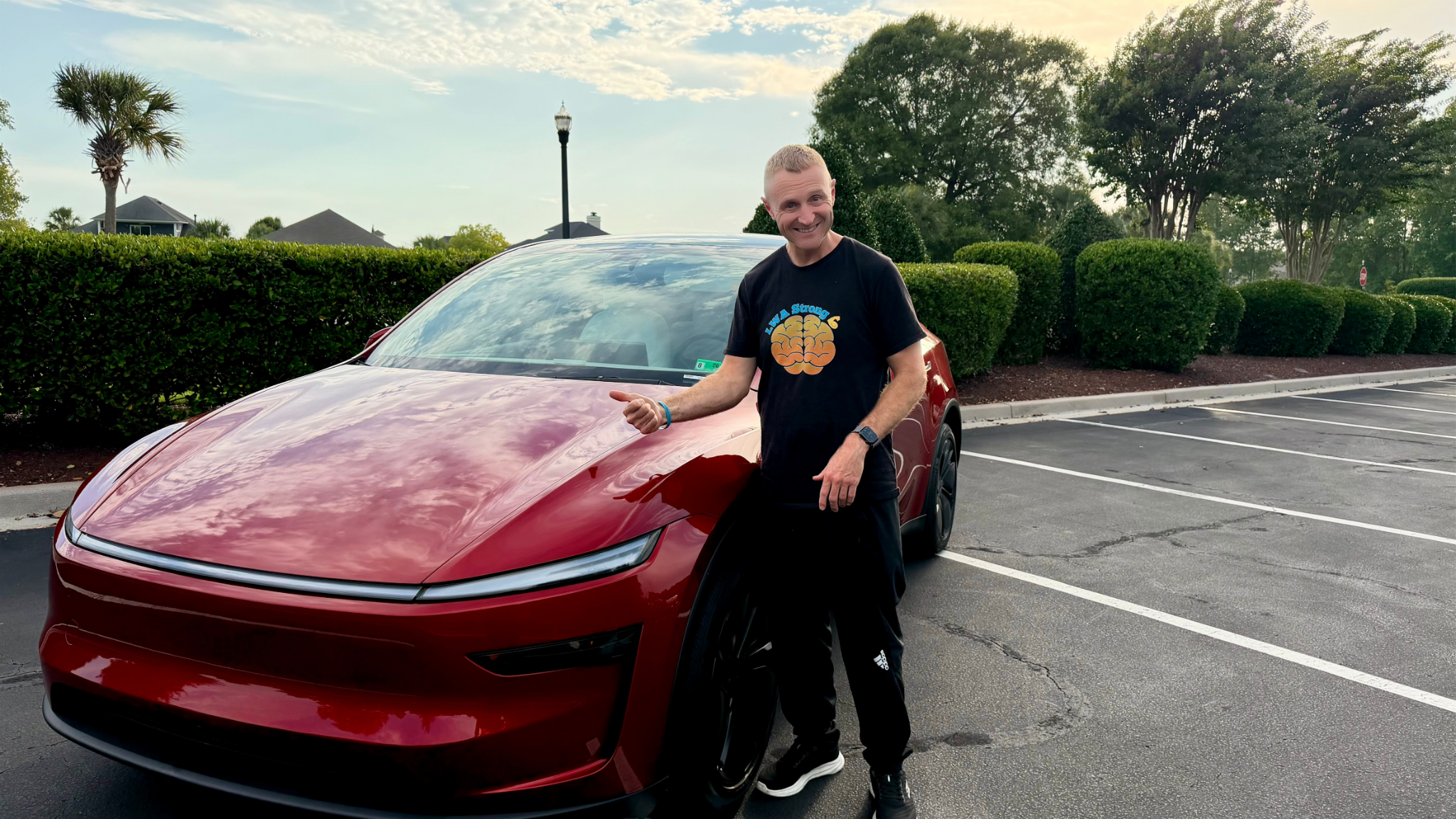
I turn 40 today.
Not long ago, I wasn't sure what 40 was going to look like. Honestly, I figured it would look like the inside of a wheelchair. So I'm going to sit with this one for a second — and then I'm going to say some things I've been holding in.
I'm Lucky. I Know It.
I have ataxia, and I like to call it MS on steroids.
It took everything. My balance. My coordination. My independence. I couldn't touch my own nose. I spent 18 months bouncing between hospitals with no diagnosis, and I left those hospitals in a wheelchair — with neurologist after neurologist telling me the wheelchair was as good as it gets. Georgetown University Hospital finally put a name on it. A name. Not a plan.
So I built the plan myself.
Today I walk. I drive. I carry my own groceries. I travel. I live alone, on my own terms. I don't take a single day of that for granted. Not one.
I got there with exercise and nutrition — the same approach LWA is built on. Stem cells came after. I was already independent when I became the first person with ataxia to get stem cell treatment, through R3 Stem Cell. Two treatments done, a third on the way. That's the cherry on top. It's not the cake. (I wrote the whole story in From Wheelchair to Walking and Stem Cells and Rehab.)
And here's the part that still gets me: I'm stronger at 40 than I was at 35. That's not supposed to happen with a progressive neurological condition. Yet here I am.
Am I lucky? Absolutely. I had the stubbornness to refuse the prognosis. I had people around me who wouldn't let me quit. And I had some grace I can't fully explain. Not everyone gets all of that. I know it.
Why LWA Exists
I built LWA because I didn't want luck to be the deciding factor for anybody else.
Not a maybe. Not a someday. Not "we're working on a cure." A real, right-now program that moves you toward independence today.
It's two pieces, and they don't work apart. Exercise gives the brain the signal. Nutrition gives it the material to act on that signal. You can't rebuild a nervous system on bad fuel. That's why we push carnivore, or at minimum carnivore-leaning — and I'll tell you straight: it will not lower your cholesterol. Good. Your brain is built out of the stuff. It's also why nutritional guidance is in every single LWA package. The depth scales with the tier. It's never optional, and it's never an upsell.
Am I doing enough? I think about that a lot. I think about the people who reach out and can't afford a program. I think about the people who put in the work and don't get the exact results I got. I think about whether I'm reaching enough people, saying the right things, saying them loud enough.
Then I hear from a client who's standing without the walker. Who's cooking their own meals again. Who tells me a conversation with me was the first time anyone talked to them like recovery was actually possible.
That's why I'm here. That's what 40 means to me.
And none of it happens without my business partner, Danny Walls. I bring the lived experience. Danny brings 20 years of professional muscle. Danny — thank you, brother.
The Thing I Need to Say About the Organizations
I've held back on this for a while. Today, on my birthday, I'm done holding back.
There are organizations out there — big ones, well-funded ones, glossy websites, annual galas, celebrity spokespeople — that exist to help people with neurological conditions. Some of them do good work. I'll be fair about that.
But a lot of them have a structural problem, and it's hurting the exact people they claim to serve.
They are obsessed with the cure. And chasing the cure, they've abandoned the present.
I'm not against research. I want a cure for ataxia as much as anyone alive. But the cure isn't coming next week. It's probably not coming next year. For most people living with a neurological condition right now, the cure — if it comes — shows up too late to give back the years they're losing today.
And while the money pours into someday:
The person with ataxia is falling in their kitchen. The person with MS is losing their job because nobody helped them handle the fatigue. The person with Parkinson's is giving up driving, then cooking, then walking — because nobody told them exercise and nutrition could fight back.
Nobody asks what a drug is doing to how you move, balance, and function today. Handing a statin to a neurological patient should set off alarm bells. Usually it doesn't. That gap — between your real life right now and a number on a lab report — is the whole reason LWA exists.
The here and now is being neglected. Systematically. In favor of a future that may or may not show up in time to matter.
The Hamster Wheel
I'll say the other part too — and I'll say it as my opinion, because that's what it is.
Chronic condition management is a business. Ongoing fundraising needs ongoing urgency. When I look at how some of these organizations are built — not all, but some — I don't see anything designed to make you need them less.
I'm not calling the people inside them cynical. Most of them care, a lot. But structure beats intention every time. And a structure like that ends up better at maintaining your condition than improving it. That's the "just manage it" mindset I've written about before — and managing your symptoms is not living.
Here's what I know for certain, because I lived it: most neurological conditions are progressive when you take the wrong approach. We have the right approach.
I got off the hamster wheel. I built LWA to get you off it too.
That's not a comfortable thing to say. I'm saying it anyway.
What I Want for the Next 40 Years
I want to help more people do what I did — and not just people with ataxia. MS, Parkinson's, stroke, TBI, cerebral palsy, ALS, neuropathy, spinal cord injury. If the signal between your brain and your body is broken, it can be rebuilt. That's the whole foundation.
I want LWA to be what people find after they've been told there's nothing left to do — and I want us to prove that wrong. Over and over.
I want to keep standing behind our guarantee. Complete the mobility checklist to 100%, and independence is guaranteed. I'll be straight with you: not every client ends up walking fully on their own. But every committed client makes progress. Every one.
I want to keep being honest, even when it's uncomfortable. Especially when it's uncomfortable.
And I want to keep waking up grateful that I can walk to my own kitchen, make my own coffee, and go to work on something I believe in.
That's enough. That's more than enough.
Happy birthday to me.
And thank you — from the bottom of my heart — to everyone who has trusted LWA with their recovery. You're the reason I built this. You're the reason I keep going.
Now let's get back to work.
Get Comfortable With Being Uncomfortable That's the LWA way. Knowing your enemy is half the battle — and after 40 years, I know mine pretty well. It's not ataxia. It's settling.
— Art
Living with MS, ataxia, Parkinson's, a stroke, TBI, cerebral palsy, ALS, neuropathy, or any other neurological disorder? Every LWA package starts with a FREE 30-minute Zoom consultation — custom workouts, video demos of every exercise, and nutritional guidance built around your condition and your goals.
INDEPENDENCE GUARANTEED.
LWA — Helping People With ALL Disabilities.
lwastrong.com | YouTube: @LWAstrong
Explore Topics
Written by
Art Thomas
Content creator and writer sharing insights and stories.