Who We Are
About
Built by people who live it. Programs designed for people who refuse to give up.
The Team
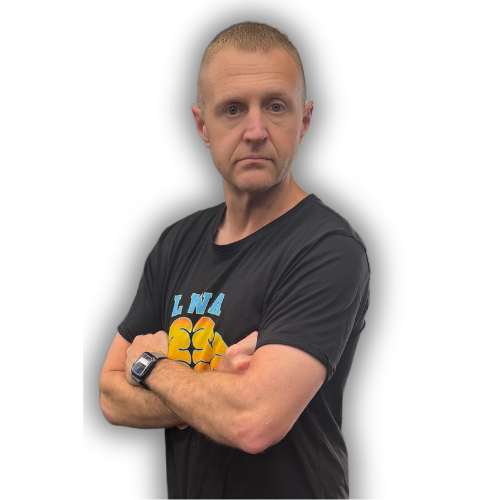
Art Thomas — Founder & CEO
Art Thomas — LWA Founder/CEO
With Our Approach, You Can Achieve Complete Independence.
My name is Art Thomas. I have Acquired Ataxia — and that condition accelerated my unknown hereditary Ataxia, compounding the challenges I face every single day.
For a year and a half, no one knew what was wrong with me. No diagnosis. No answers. Just a body that was failing and a medical system that couldn't explain why. It was Georgetown University Hospital that finally gave me the diagnosis that changed everything: Ataxia.
When I got out of the hospital, I couldn't even touch my nose. Basic coordination — the kind most people never think about — was completely gone. I was in a wheelchair, dependent on others for everything. Walking, driving, traveling, living alone — all of it felt like a distant memory.
I became the very first person in the world to go from a wheelchair to complete independence using the LWA approach. Not partial independence. Complete independence — walking, driving, traveling, and living alone. This approach is the only one of its kind in the world, and I built it because nothing else existed that could do what I needed it to do.
I also made history as the very first person with Ataxia to undergo stem cell treatment through R3 Stem Cell — a groundbreaking step that opened new doors for neurological rehabilitation. The results were absolutely amazing. R3 Stem Cell is now an official advisor to LWA.
The cerebellum, often called the "little brain," is responsible for coordinating and controlling motor functions. I built LWA because I needed it to exist — a program built by someone living it, not just studying it. Now it exists for you.
The Diagnosis
A Year and a Half With No Answers
Before the diagnosis, Art spent eighteen months in a medical system that had no explanation for what was happening to his body. Doctors ran tests. Specialists offered theories. Nothing stuck. Meanwhile, his coordination was deteriorating — slowly at first, then faster. The kind of deterioration that makes you question everything you thought you knew about your own body.
Georgetown University Hospital finally delivered the answer: Ataxia. Specifically, Acquired Ataxia — which had triggered and accelerated an underlying hereditary Ataxia that had gone undetected his entire life. A dual diagnosis. Two conditions compounding each other. The medical team was honest: there was no cure, and conventional rehabilitation had limited tools for what Art was facing.
"Manage your symptoms" was the best conventional medicine could offer. Art refused to accept that as a destination.
What Conventional Rehab Couldn't Do
The System Wasn't Built for What Art Needed
Traditional physical therapy is designed around injury recovery — a torn ACL, a hip replacement, a broken bone. The model is: injury occurs, therapy restores function, patient is discharged. It works well for what it was built for. But neurological conditions like Ataxia don't follow that model. There's no "restored" baseline to return to. The goal isn't recovery to a prior state — it's building new neural pathways where the old ones are damaged or missing.
Art went through the conventional system. He did the standard physical therapy. He followed the protocols. And while he made some progress, the ceiling was low. The programs weren't designed for someone trying to go from wheelchair to complete independence — they were designed to help someone function a little better within their limitations. Art didn't want to function within his limitations. He wanted to eliminate them.
The turning point came when Art stopped asking "what does the system offer?" and started asking "what does the brain actually need to rebuild coordination?" The answer — rooted in neuroplasticity research, cerebellar rehabilitation science, and anti-inflammatory nutrition — became the foundation of the LWA approach.
The Breakthrough
Wheelchair to Walking — Then Driving. Then Living Alone.
The first time Art walked unassisted after his diagnosis, it wasn't a dramatic Hollywood moment. It was the result of months of deliberate, progressive, uncomfortable work — the kind of work that demands more from your nervous system every single session. The kind of work that most rehabilitation programs don't prescribe because it's hard to standardize and even harder to push through.
Walking was the beginning, not the end. Art went on to drive again. To travel independently. To live alone. Each milestone wasn't luck — it was the direct result of a systematic approach to neuroplasticity: demanding more from the brain and body than they thought they could give, consistently, over time.
Art also became the first person with Ataxia to undergo stem cell treatment through R3 Stem Cell. The results were remarkable. R3 Stem Cell is now an official advisor to LWA — a partnership built on shared results, not theory.
He built LWA because no program like it existed. Not because he wanted to build a business — because he needed it to exist, and if he didn't build it, nobody would. Now it exists for every person who gets a neurological diagnosis and hears "manage your symptoms" when what they actually need to hear is: "here's how you fight back."
To Someone Diagnosed Last Week
"You are not your diagnosis. Your condition is a starting point, not a finish line. The brain is more adaptable than any doctor will tell you — but only if you demand more from it. That's what LWA is built to do."
— Art Thomas, Founder & CEO, LWA
Danny Walls — Health & Fitness Advisor
20 Years. Real Results. Real People.
My name is Danny Walls. I have been a personal trainer for the past 20 years — and not the kind who counts reps from across the room. I've worked directly with clients facing some of the most challenging physical conditions imaginable, including dozens of neurological disorders.
I trained as a chiropractor's assistant, where I learned to understand the relationship between the spine, the nervous system, and movement. That background changed how I think about rehabilitation — it's not just about muscles. It's about the signals those muscles receive, and what happens when those signals are disrupted.
I also trained in Thai massage — a discipline that combines assisted stretching, joint mobilization, and deep tissue work in ways that complement neurological rehabilitation in ways most trainers never consider. Understanding how the body moves as a connected system, not a collection of isolated parts, is what separates real rehabilitation from generic exercise programs.
What works is understanding the person in front of you — their condition, their limits, and their potential. That's what we do at LWA. Every single time.
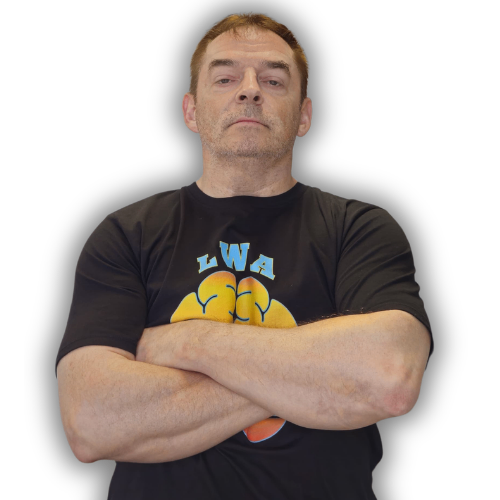
Danny Walls — Health & Fitness Advisor
Danny's Background
The Professional Backbone of Every LWA Program
20 Years Personal Training
Two decades of hands-on training with clients across a wide range of conditions — from general fitness to complex neurological rehabilitation. Danny has seen what works and what doesn't, and he builds programs accordingly.
Chiropractic Assistant
Trained and worked as a chiropractic assistant, developing a deep understanding of spinal mechanics, nerve function, and the relationship between structural alignment and neurological performance. This background directly informs how LWA programs address movement dysfunction.
Thai Massage Practitioner
Thai massage combines assisted stretching, joint mobilization, and pressure point work in ways that complement neurological rehabilitation. Danny uses these techniques to address muscle tone, range of motion, and the nervous system's response to movement — elements that standard exercise programs miss entirely.
Why It Works
Lived Experience + Professional Expertise. There's No Substitute.
Most rehabilitation programs are designed by people who have studied neurological conditions. LWA is designed by someone who has lived one — and partnered with someone who has spent 20 years professionally rehabilitating people with them. That combination doesn't exist anywhere else.
Art knows what it feels like when your body won't do what your brain tells it to. He knows the frustration of a system that offers management instead of progress. He knows what it takes — mentally and physically — to push through the discomfort that real neurological rehabilitation demands. That lived knowledge shapes every program LWA builds.
Danny knows the mechanics. He understands how to build a progressive exercise program that challenges the nervous system without overwhelming it. He knows how nutrition interacts with neurological function. He knows how to read a client's body and adjust in real time — not just follow a script.
Together, they build programs that are honest about what's hard, realistic about timelines, and uncompromising about the goal: independence. Not managed decline. Not symptom suppression. Independence.
Ready?
Free 30-Minute Zoom Consultation with Art or Danny.
No commitment. Just real talk about your goals and how LWA can help.