Building Your Support System: The Kind That Makes You Stronger, Not Softer
You need people. But here's the part nobody else will say out loud — the goal is a support system you need LESS of over time. Here's how LWA thinks about building the kind of support that actually moves you toward independence.
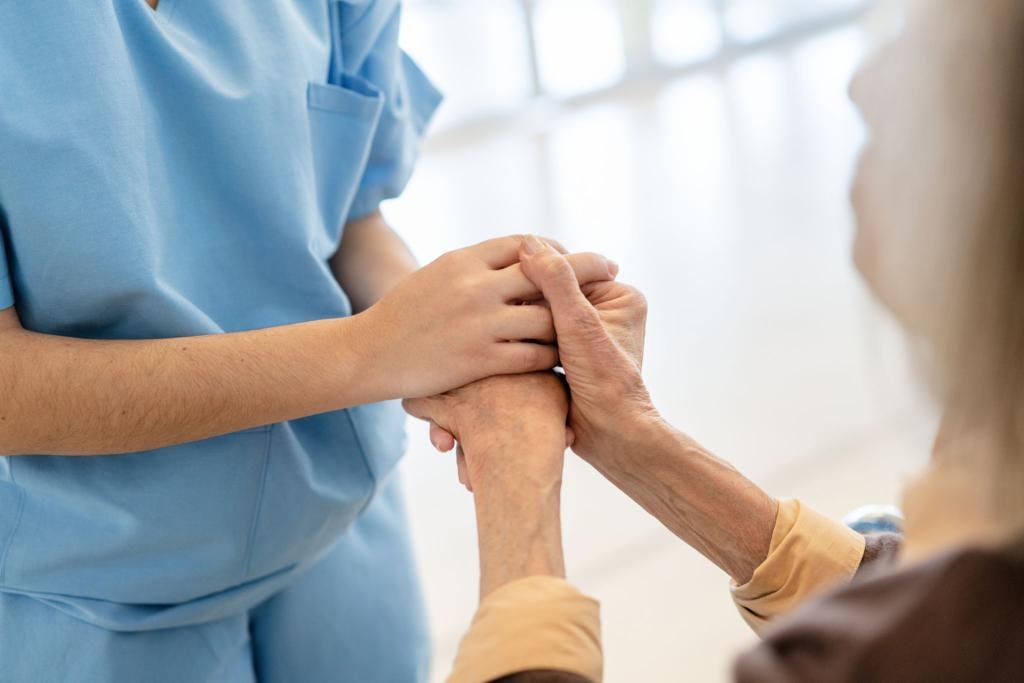
Let's start with a hard fact, then I'm going to tell you the part nobody else will.
Loneliness is as damaging to your physical health as smoking 15 cigarettes a day. That's not me being dramatic — it comes out of a meta-analysis of 148 studies and roughly 300,000 people. Social isolation bumps your mortality risk by about 26%. It jacks up cortisol, drives inflammation, wrecks your sleep, tanks your immune system, and speeds up cognitive decline.
Now stack that on top of a neurological disorder — where the inflammation, the bad sleep, and the brain fog are already part of the deal — and isolation isn't an inconvenience. It's a second disease riding on top of the first one.
And here's the cruel part: neurological disability is built to isolate you. I have ataxia, and I like to call it MS on steroids — it goes after your balance, your coordination, your speech, the cerebellum that's supposed to run all of it. Park that next to fatigue, mobility limits, and the embarrassment a lot of people feel about being seen struggling, and you've got a recipe for sitting at home alone. That isolation isn't a character flaw. It's the condition doing what the condition does — unless you fight it.
So yes, you need people. But here's the part nobody else will say out loud.
The Goal Is a Support System You Need LESS of Over Time
Most articles about "building a support system" basically tell you to assemble a permanent pit crew that pushes your wheelchair, cuts your food, and manages your life forever. Mainstream medicine loves that model. It treats you as someone to be managed — safely, indefinitely, while everyone waits around for a cure that's always ten years away.
That's not how we do it at LWA.
A support system isn't a cage you build around yourself. It's scaffolding. Scaffolding goes up around a building so the real structure can get strong — and then the smart builder takes the scaffolding down. If the scaffolding never comes down, you don't have a building. You have a permanent dependency wearing a hard hat.
The right support builds you toward independence. The wrong support quietly trains you to need it forever. Both feel like "help." Only one of them actually serves you.
So as you build your team, keep asking the only question that matters: Is this support making me more capable, or just more comfortable being incapable?
With the right approach, a lot of the help you think you'll always need? You won't. That's the whole point. That's what INDEPENDENCE GUARANTEED actually means.
Support Is a Clinical Variable, Not a Luxury — But Pick the Right Kind
Let me be fair to the research, because it's real. People with strong support systems recover faster, stick with their rehab, feel less pain, get less depressed, and live longer. In neuro rehab, social support predicts outcomes about as strongly as the clinical stuff. Somebody with moderate impairment and a strong corner often out-performs somebody with milder impairment who's going it alone.
Why? Not because support makes the neurology easier. It doesn't. It's because support makes the work possible. Rehab is hard, slow, and discouraging. Having people who believe in you, show up, hold you accountable, and celebrate the small wins is the difference between continuing and quitting.
But read that carefully. The support that helps you is the support that keeps you doing the work — not the support that does the work for you. Big difference. One builds a person who walks. The other builds a person who's very well taken care of while they decline. Get comfortable with being uncomfortable, because the support worth having is going to push you, not pamper you.
The Kinds of Support You Actually Need (and How Each One Should Be Aimed at Independence)
Practical support — transportation, meals, meds, household stuff. The most visible kind, and often the most needed early on. But aim it: every practical task someone does for you is a task to ask, "Can I be trained to do part of this myself yet?" Today they hand it to you. The goal is that next month you reach for more of it.
Emotional support — someone who listens without trying to fix you, who can sit with you in the hard moments. Harder to find than practical help, and more valuable. Just make sure it's the kind that says "I've got you and you're capable," not the kind that agrees you're fragile.
Informational support — people who help you navigate the medical maze, research options, and actually understand your condition instead of nodding along. A sharp friend, an advocate, or a community that's been where you are.
Motivational support — the people who push when you need pushing, celebrate the wins, and remind you how far you've come when all you can see is how far's left. A good coach. A training partner. Somebody who flat-out won't let you quit. This is the engine of the whole thing.
Peer support — connection with others living this. Irreplaceable, because they get it from the inside. Nobody who hasn't lived it can give you that.
Building Your Team
Start with honesty. People can't help you if they don't know what's actually hard. That takes some guts — telling people what you really need and, just as important, what's not helping. Most people want to help and have no idea how. Give them specifics. And don't be afraid to tell the well-meaning ones, "Stop doing that for me — let me try."
Join a community. The LWA Facebook Group — Living With Ataxia — is people who understand neurological disability from the inside, for every condition, not just ataxia. Peer support from people who get it is irreplaceable. Find your people.
Communicate with your caregivers. If family or paid help is in the picture, talk regularly and honestly about what's working and what isn't. Caregiver relationships go sideways when needs change and nobody updates the plan.
Work with professionals who see the whole picture — and who actually want you to need them less. Here's the LWA gut check: a good professional is working themselves out of a job with you. If your provider is only treating your body, ignoring your life, and seems perfectly content to "manage" you forever without ever raising the bar — find better providers. We measure ourselves by how much more you can do, not by how long you keep paying us.
Protect your relationships. This stuff puts real strain on marriages and families — role changes, grief, money stress, logistics. Investing in those relationships proactively isn't weakness. It's maintenance on the most important part of your team.
For the Caregivers: You Are Not Invisible — and the Best Thing You Can Do Is Aim for Their Independence
Caregiving for someone with a neurological condition is one of the hardest jobs a human being can do. Exhausting, draining, expensive, isolating. Burnout isn't a personal failure — it's the predictable result of an unsustainable setup with no support behind it.
If you're a caregiver:
- Your needs matter. Not just because a burned-out caregiver gives worse care — though that's true. They matter because you're a person, full stop.
- Ask for help. Accepting help isn't weakness, it's wisdom. Build a support system for yourself, not just for the person you're caring for.
- Find your community. Caregiver groups, online or in person, are a place to be honest about the hard parts without guilt.
- Set limits. You can't pour from an empty cup, and martyrdom helps nobody.
And here's the part that's easy to miss: the most loving thing you can do is help them become more independent, not less. It's faster to just do it for them. It feels kinder in the moment. But every time you do something they could be trained to do, you take a little of their independence with it. Push them. Let them struggle through the thing they can almost do. That's not cold — that's love with a backbone. The dignity is in the doing.
The Mainstream Blind Spot
Here's what drives us crazy. The whole machine is built around "managing" neurological patients — keep them safe, keep them comfortable, keep them stable while everyone waits on a someday cure. Almost nobody stops to ask the only question that matters to your actual life: What can you do today that you couldn't do last month?
That same blind spot shows up in how people get told to build a support system: stack up enough help that you never have to be uncomfortable again. We think that's backwards. A support system that removes all discomfort also removes all growth. Your real life — moving, balancing, functioning, carrying your own load — versus a tidy, comfortable, "managed" decline. That gap is the entire reason LWA exists.
The LWA Community
One of the things I'm proudest of is the community we've built. Our clients support each other. They share the wins and the ugly days. They hold each other accountable and they cheer each other on. That community isn't a side feature — it's part of the work, because the people who make the most progress are the ones who don't try to do it alone.
But notice what that community is for. Not to prop each other up forever. To push each other forward. To get each person doing more on their own than they thought they could. Support that builds independence — that's the LWA way.
Get comfortable with being uncomfortable. Knowing your enemy is half the battle. Isolation is the enemy. So is the comfortable cage. We'll help you beat both.
Ready to build a support system that actually moves you toward independence instead of away from it? Book your FREE 30-minute Zoom consultation and become part of the LWA Strong family. Whatever the neurological condition — ataxia, MS, Parkinson's, stroke, TBI, and beyond — we'll help you get as independent as humanly possible.
INDEPENDENCE GUARANTEED.
LWA — Helping People With ALL Disabilities. lwastrong.com | YouTube: @LWAstrong
Explore Topics
Written by
Art Thomas
Content creator and writer sharing insights and stories.


